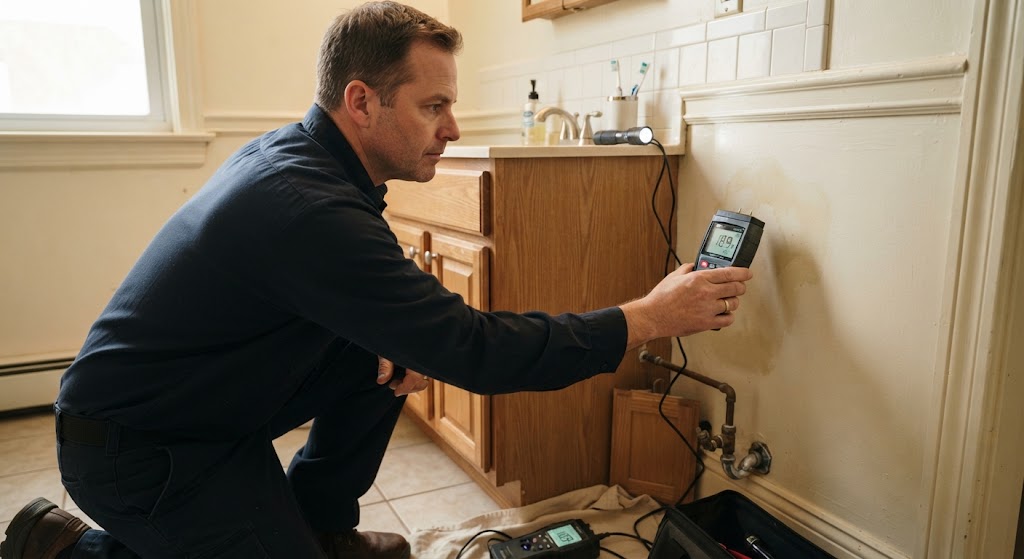
Plumbing Leak vs. Groundwater Seepage: The Big Question
Finding moisture on your basement floor or damp carpet in a finished recreation room is alarming. Many homeowners assume foundation seepage is the culprit and invest thousands in french drains or sump pumps, only to discover that water continues pooling during dry mid-summer weeks. In Princeton neighborhoods—such as historic properties in the Western Section, homes along Riverside, and residences near Princeton University—distinguishing between foundation seepage and a water in basement plumbing leak Princeton issue is the crucial first step.
Groundwater intrusion usually correlates directly with heavy storms, saturated surface soils, and rising water tables along Lake Carnegie. Conversely, pressurized supply lines, leaking water heaters, faulty drain stacks, and cracked trap primers leak around the clock regardless of weather conditions. Our diagnostic tests provide definitive answers before you commit to invasive construction.
Unsure If Your Basement Water Is Plumbing or Groundwater?
Call (201) 510-1615 to talk directly with an experienced Princeton leak detection specialist. We conduct precise diagnostic testing to identify the true source.
📞 Call (201) 510-1615Finished-Basement Vulnerabilities Behind Drywall
Finished basements offer valuable living space, media rooms, and home offices, but they completely conceal overhead and perimeter plumbing. When supply lines or vertical drain stacks develop pinholes, moisture spreads invisibly behind insulation and studs:
Concealed Supply Lines
Hot and cold domestic copper pipes routing through basement framing can suffer from vibration wear or fitting fatigue. A basement pipe leak Princeton incident can saturate baseplates and drywall tracks long before standing water surfaces on flooring.
Water Heaters & Boilers
Aging tanks, temperature and pressure relief valves, expansion tanks, and boiler feed lines can leak silently, releasing small trickles that follow slab cracks under subflooring.
Floor Drains & Trap Primers
Underground floor drain piping can settle or crack, and automatic trap primers can fail in an open position, creating mysterious puddling on slab surfaces.
Sump Discharge & Check Valves
Failed check valves or cracked discharge piping on sump systems can recirculate expelled water directly back through basement foundation walls.
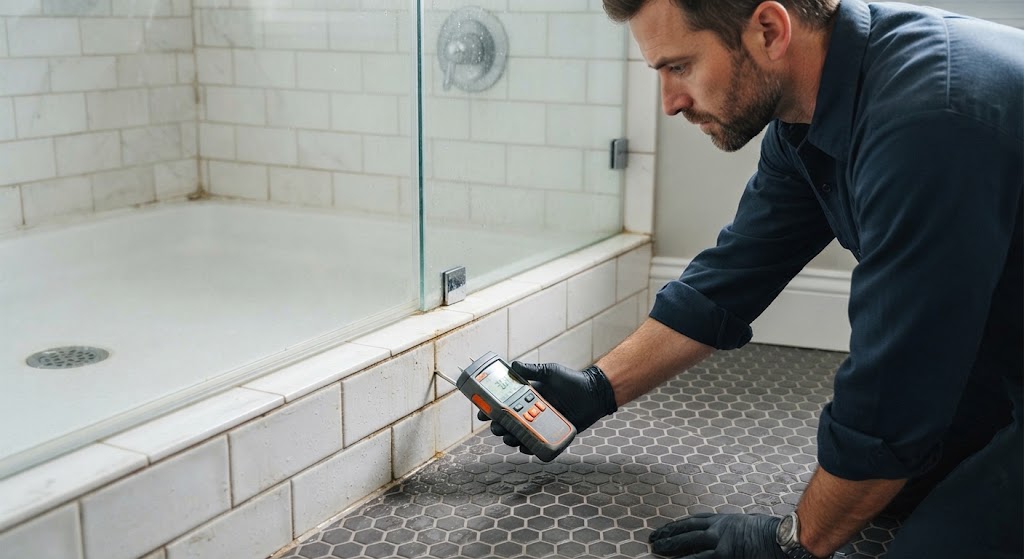
Diagnostic Testing Methodology for Basements
We eliminate guesswork when troubleshooting a wet basement leak Princeton NJ situation through structured scientific testing:
Chemical Water Analysis: We perform on-site testing for chlorine and fluoride. If the sample tests positive, the moisture originates from treated municipal tap water rather than natural groundwater.
Hydrostatic Pressure Testing: We isolate your home's domestic water distribution system and monitor for pressure decay. If pressure drops with all fixtures sealed, an active supply line breach is confirmed.
Infrared Thermal Scanning: High-resolution thermal cameras reveal cold or hot evaporation plumes behind basement sheetrock, identifying exact wet wall cavities.
Acoustic Listening Disc Testing: We listen through concrete floor slabs to detect pressurized line leaks running beneath basement floors.
Our Step-by-Step Basement Leak Investigation Process
Water Source Chemical Identification
We test standing or weeping water for municipal disinfectants to establish whether the source is potable utility water or untreated groundwater.
Supply Line Integrity Pressure Audit
We perform precision pressure tests on hot and cold plumbing manifolds to identify or rule out pressurized pipe breaches.
Thermal & Acoustic Envelope Inspection
We inspect basement ceilings, finished drywall partitions, boiler connections, and floor slabs to pinpoint the exact breach coordinates.
Diagnostic Report & Resolution Guidance
We provide clear documentation. If plumbing is the source, repairs require a NJ licensed master plumber; if groundwater is the cause, we point you toward waterproofing specialists.
Stop Basement Moisture at the True Source
Save money and avoid unnecessary waterproofing systems. Call our Princeton diagnostic specialists at (201) 510-1615 to test your basement water today.
📞 Call (201) 510-1615Related Leak Locating Services in Princeton
Explore our complete range of non-invasive diagnostic capabilities across Princeton:
- If water is running beneath concrete slab floors, visit our slab leak detection page.
- For underground exterior pipes between the street curb and foundation, see water line leak detection.
- For moisture hidden behind upstairs walls or ceilings, review hidden water leak detection.
- Learn more about our local coverage across all Princeton service areas including Palmer Square.
Frequently Asked Questions About Basement Leaks
How do you tell if basement water is a plumbing leak or groundwater seepage?
We test domestic water lines for pressure drops, analyze chlorine and fluoride levels in the pooled water, and monitor water meter activity. Groundwater seepage tracks external weather patterns and lacks municipal sanitizing chemicals, while plumbing leaks run constantly regardless of rainfall.
Can a hidden pipe leak damage a finished basement behind sheetrock?
Yes. Supply lines, drain stacks, and water heater feeds running behind basement studs can produce silent moisture for months, cultivating black mold and rotting wood sill plates before dampness appears on the carpet.
Why is water gathering around my basement floor drain?
Water pooling near a floor drain may indicate an underground drain line stoppage, a leaking trap primer, or backpressure from a sump discharge line. We inspect and diagnose drain piping to isolate the failure.
Speak with a Princeton Basement Leak Specialist
Get clear diagnostic answers before spending thousands on trial-and-error work. Call (201) 510-1615 now to schedule a basement leak inspection.
📞 Call (201) 510-1615